Thursday, April 20, 2017

Geologic Timeline Reflection

One major event in Earth's history was the Cretaceous-Paleogene extinction. What made it significant was how it was the end of the dinosaurs and their was a loss of 76% of species. Another reason why it was a major event, was that because the dinosaurs became extinct it introduced other species later such as mammals, insects, and birds. Another major event was the appearance of human ancestors, which is significant because if they didn't exist we may not be here today our we could've evolved from something else. Finally, another major event was Permian-Triassic Extinction, which is significant because 96% of species became extinct and during that time there was a lack of oxygen in the ocean. 1280px-Postosuchus.jpg (1280×857)

The scale of the Earth is separated into different periods which all add to around 4.6 billion years and humans have only showed up 5.3 million years ago which is a huge difference compared to the origin of the Earth. What surprised me was that in the video we watched we are only a second out of 12 months. 

We have made a huge impact on our planet in a short time. For example we now are creating building and other things that have now replaced environments that have been there for a long time. Also we have invented many things in a short amount of time compared to the time before humans existed. 

Sunday, April 9, 2017

Unit 8 Reflection


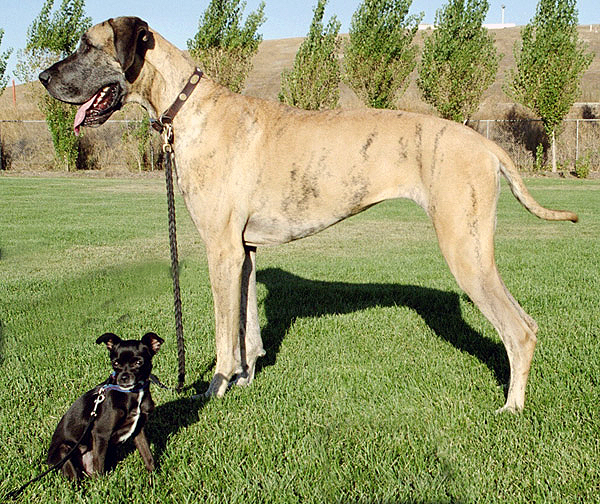
Big_and_little_dog_1.jpg (600×504)
838px-Portrait_of_Charles_Darwin._Wellcome_M0010103.jpg (838×1024)In the beginning of this unit we learned about artificial selection, which is when humans select traits from a population's variation and they only mate individuals who have that trait. The result is that the species changes over time and a new breed is created. Some examples of artificial selection are dogs like collies which are used for sheep herding, and cattle which contains a lot of meat or milk. After we learned about Charles Darwin, who discovered that natural selection causes evolution, and that natural selection is a process that weeds out traits that don't help an individual survive. In the Hunger Games Lab, we conducted an experiment to see how natural selection causes a population to evolve, which relates to what we learned in this unit.

Next we learned about the gene pool which is the total of all alleles in a population, and allele frequency which is how common an allele is in a population. Then we learned about speciation, the rise of two or more species from one existing species and the causes which are behavioral isolation, geographic isolation, and temporal isolation. Later we learned about genetic drift which is when a random event drastically changes a population and gene flow which is when alleles move from one population to another. Finally we learned about the four Eras which include the Precambrian, Paleozoic, Mesozoic, and Cenozoic Era.

One thing that I would want to learn more about would be how far can humans go to change species that they want using artificial selection. One thing that I was wondering about was how did humans change species for their own purposes and how long did it take to achieve what they wanted. What I have done to be more assertive is trying to make eye contact when saying something to someone in class, and the things that I could work on is my posture because when I talk to someone my posture becomes different because for me it is uncomfortable to look in the eyes of someone else and talk about something.