This unit was about DNA which is antiparallel and contains 3 parts which are a nitrogen base, a phosphate group, and a sugar. Other topic that we learned about was transcription which is when the RNA Polymerase reads and copies the gene for a protein, and translation where the ribosome reads the mRNA and translates the nucleotides into amino acids. After we learned about mutations such as frameshift mutations where either an extra base pair is put into the code or a base pair is left out. Finally we learned about gene expression where the gene is used to produce a gene product of phenotype, and gene regulation where a mechanism is used to increase or decrease the expression of a gene. One topic that I didn't really understand at first was gene expression and regulation, and one topic that I understood the most was mutations. Thursday, December 15, 2016
Unit 5 Reflection
This unit was about DNA which is antiparallel and contains 3 parts which are a nitrogen base, a phosphate group, and a sugar. Other topic that we learned about was transcription which is when the RNA Polymerase reads and copies the gene for a protein, and translation where the ribosome reads the mRNA and translates the nucleotides into amino acids. After we learned about mutations such as frameshift mutations where either an extra base pair is put into the code or a base pair is left out. Finally we learned about gene expression where the gene is used to produce a gene product of phenotype, and gene regulation where a mechanism is used to increase or decrease the expression of a gene. One topic that I didn't really understand at first was gene expression and regulation, and one topic that I understood the most was mutations. Tuesday, December 13, 2016
Protein Synthesis Lab
1. The first step required to make a protein in this lab was copying the sequence of a DNA strand. After we made an mRNA copy of the strand using transcription. Transcription is when the gene is copied by an enzyme. Then after we translated the mRNA sequence into an amino acid chain or protein. Translation is when the ribosome reads the first three bases and then the amino acid is then determined by the codon.
2. The effects of changing bases in DNA molecule varies depending on what mutation occurred. The mutation that seemed to have the greatest effect was deletion, then insertion, and then substitution had the least effect to the protein. It does matter where the mutation occurs because the amino acid chain could just stop at the beginning or not have as many amino acids. If the T was near the end, then the protein would change because it would be an A near the end instead of another base which would also change what the amino acid would be.
3. In step 7 I chose deletion as the mutation, because I noticed that it had the most effect on the protein. When we had to delete a base it ended up having an amino acid chain that had less amino acids than when we used substitution and insertion as our mutations. It does matter where the mutation occurs because if a base is deleted from the beginning of a sequence and it ended up being a stop codon it would change the protein by not having a sequence.
4. A mutation could affect your life because if proteins are determined by the sequence of amino acids and a mutation occurred in the sequence, then the protein would change depending on the effect from the mutation. One mutation that I found was called duplication which is when a piece of DNA is copied abnormally once or more.
2. The effects of changing bases in DNA molecule varies depending on what mutation occurred. The mutation that seemed to have the greatest effect was deletion, then insertion, and then substitution had the least effect to the protein. It does matter where the mutation occurs because the amino acid chain could just stop at the beginning or not have as many amino acids. If the T was near the end, then the protein would change because it would be an A near the end instead of another base which would also change what the amino acid would be.
4. A mutation could affect your life because if proteins are determined by the sequence of amino acids and a mutation occurred in the sequence, then the protein would change depending on the effect from the mutation. One mutation that I found was called duplication which is when a piece of DNA is copied abnormally once or more.Wednesday, December 7, 2016
Unit 4 Reflection
Recently we did a coin sex lab, where we wanted to test how we can use probability to predict what offspring would be like in different circumstances. The coins represented the genes that the two parents might pass on to their offspring, like whether or not the trait will be homozygous or heterozygous. In our dihybrid cross simulation, there are two individuals who are double heterozygous with brown hair ans brown eyes. After we labeled a meiosis to see what the cross would be and the possible gametes. Then after we filled out our dihybrid punnet square, we expected that the offspring would mainly have brown eyes and brown hair over having blue eyes and blond hair or a combination of the two. In our actual results over half of the offspring would have brown eyes and brown hair, and only one had blond hair and blue eyes. I think that because the brown eyes and brown hair was a dominant trait, it would've had a higher chance of the children inheriting the trait. For example, in another simulation about autosomal dominance, we did a monohybrid cross where the person didn't have the bipolar disorder run in their family, but the spouse was heterozygous for that trait. In our results for that simulation, the children mainly inherited the bipolar trait over not inheriting it. The limit of using probability to predict our offspring's traits is that it may show you the possibilities of what your child could inherit but it doesn't actually guarantee that the child will actually inherit or not inherit the allele. This relates to my life because it shows how the genes from my parents could've had different possibilities that I could've inherited, and that how there are many combinations that could either be passed by autosomal inheritance or x-linked inheritance.
This unit was about genetics and sex, such as how genes can be inherited and the different processes like mitosis and meiosis. Other things we learned about was the difference between asexual and sexual reproduction, and Gregor Mendel's Sex Laws which are the Law of Segregation and the Law of Independent Assortment. My strengths were when we had to use punnet squares to predict different possibilities that offspring can inherit, and my weakness was learning and understanding how mitosis and meiosis work and why they are important.
Throughout this unit, I learned more in depth about the topics that we had to include in our infographics, because we got to go over topics that we learned previously in our vodcasts and research more about them. I feel like I am a better student, because when we started this unit, I didn't fully understand the information in the vodcasts at first, but now after learning about the topics in the vodcasts more than one time helped me understand what we were learning. One question I have is in what situations would you use a dihybrid cross over a monohybrid cross.
This unit was about genetics and sex, such as how genes can be inherited and the different processes like mitosis and meiosis. Other things we learned about was the difference between asexual and sexual reproduction, and Gregor Mendel's Sex Laws which are the Law of Segregation and the Law of Independent Assortment. My strengths were when we had to use punnet squares to predict different possibilities that offspring can inherit, and my weakness was learning and understanding how mitosis and meiosis work and why they are important.
Throughout this unit, I learned more in depth about the topics that we had to include in our infographics, because we got to go over topics that we learned previously in our vodcasts and research more about them. I feel like I am a better student, because when we started this unit, I didn't fully understand the information in the vodcasts at first, but now after learning about the topics in the vodcasts more than one time helped me understand what we were learning. One question I have is in what situations would you use a dihybrid cross over a monohybrid cross.
Monday, December 5, 2016
Human DNA Extraction Lab
While our hypothesis was supported by our data, there could have been errors due to having to much of the gatorade solution in the test tube and not properly adding the alcohol into the test tube. These errors could've affected the results, because if the alcohol mixed into the gatorade solution the DNA wouldn't appear and having too much gatorade solution wouldn't allow the amount of alcohol that was needed for it. Due to these errors, in future experiments I would recommend to measure the solution more accurately and do things more carefully and take more time on it.
This lab was done to demonstrate about DNA which we learned about in the first vodcast of this unit. From this lab I learned more about the steps for extracting DNA and how DNA is polar, which helps me understand the concept of DNA. Based on my experience from this lab, I now know how to extract DNA from cells and it could help me later when I have to do something similar to this lab.
Saturday, November 19, 2016
Friday, October 28, 2016
Is sex important?
In the chapter Wholly Virgin from the book Dr. Tatiana's Sex Advice to All Creation, the Philodina and the narrator discussed about whether sex or asexual reproduction was more efficient and why. I think that sex is important because as it said in this chapter, "...sex may be an advantage is because the shuffling of genes gives an edge in the perennial battle against disease."(228) Also we can adapt to our environment because gradually organisms would need to change to be able to survive. One of the costs of reproducing sexually is that females need to have more than two children in order for the population to stay the same or grow, when asexual reproduction needs only one child for the population to stay the same. But the costs of reproducing asexually is that the organisms genes don't change and they stay the same which can be bad because they wouldn't be able to survive if their environment changed. Some arguments in the chapter were, "...what is sex for..."(213). Another one was, "Or, to get back to the central question, if they can do without sex, why can't the rest of us?"(216) The next one was, "In the long run we're all going extinct," said Miss Philodina tartly. "Sex won't save you from extinction! The dinosaurs had rampant sex, and look what happened to them. You can have sex till you're blue in the face, but if your habitat vanishes, it's you and the dodo."(224) Finally another one was, "The pocket mouse bravely interrupted: "But surely if you don't have sex, you can't adapt to the future? If you can't adapt to the future, you haven't got a future."(224) A question I have is, which organisms be both asexual and sexual?
Monday, October 24, 2016
Unit 3 Reflection
![]() |
| Egg Diffusion Lab |
| Egg Macromolecule Lab |
My weakness during this unit was understanding the process of photosynthesis and the steps of cellular respiration. My strengths were when we learned about cells because I was taught about cells before at school. I learned more about what the organelles contribute to in cells and photosynthesis. I now know about what osmosis and diffusion are better and what cellular respiration is and what ATP is. I am a better student than I was before, because when we started this unit I had no clue what we were learning about and know I know more things after we had to do things during class and watching the vodcasts.
Monday, October 10, 2016
Egg Diffusion Lab
In this lab, we had one group test an egg in deionized water and the other group tested an egg in sugar water(corn syrup) after we dissolved the egg shells. Then we observed the eggs the next class to see whether the eggs circumference or mass changed. From our results, we found out that the egg in corn syrup was in an hypertonic solution which is when the solute concentration is greater than the inside of the cell and the cell loses water so the cell shrinks and the corn syrup could've had a higher solute concentration than water.When we looked at the class data, the mass and the circumference decreased when the sugar concentration increased. There was probably more solute concentration outside the cell which made the egg shrink. The egg that my group tested decreased by over forty grams in mass and four centimeters in circumference, which shows that the egg lost a lot of its water from its cells.
The cell's internal environmental changes when molecules go in and out of cells and it can change through osmosis, which is the diffusion of water across a permeable membrane, and also passive diffusion where there is no energy exerted and it moves from high to low concentration.
This lab demonstrates how diffusion and osmosis works by using eggs as the cell. We also found out whether the egg was hypotonic, hypertonic, or isotonic.
Fresh vegetables are sprinkled with water, because if the cells in the plants don't get a lot of water, then the cell would start to lose water which would make the cell shrink. Roads are probably salted to melt ice, because salt has a higher solute concentration, so it make the cell lose its water which makes it shrink.
I would like to test to see what solutions would make egg hypertonic, hypotonic, or isotonic, because in this lab we only found out that corn syrup makes it hypertonic, and deionized water makes it isotonic because it stayed the same shape.
Egg Macromolecule Lab
In this lab we asked the question, Can macromolecules be identified in an egg cell? We found that that egg membrane tested positive for proteins, because the membrane in the solution became purple. Also, proteins can be found in the cell membrane because it allows the transportation of molecules that go in and out of the cells. This data supports our claim because it shows why the membrane was tested positive when added with the solution sodium hydroxide.
We found out that egg white tested positive for proteins when we added sodium hydroxide to it. Proteins are found throughout the cell, and there are enzymes and proteins in the cytoplasm. This data supports our claim, because it shows why there are proteins in egg whites.
Finally, we had nothing that tested positive for egg yolks.
Our data was unexpected, because nothing tested positive for egg yolk and lipids didn't test positive for egg membranes, which could have been due to the amount of drops added to the egg parts and the time the solutions were added and how long the solution was in with the parts. These errors could have affected the results, because it could've changed why we didn't get results that we should've and changed the outcome of our data. The amount of drops added could've affected the results, because if too little was added to the egg parts, then you wouldn't be able to tell if the part reacted to the solution. The time could've affected it too because if a person decided that none of them were changing, they could've just assumed that even though it was going to react after a little more time. Due to these errors, in future experiments I would recommend to have people read the instructions more carefully, especially when having to do exact measurements of liquids. Also, I think that we shouldn't rush through things and just take our time so that we could focus on the labs more.
This lab was done to demonstrate the four macromolecules that we learned in one of our vodcasts. From this lab I learned how to find out what macromolecules are in certain parts of eggs and why they are present in certain macromolecules by conducting experiments which helped me understand the concept of where macromolecules are present and their purpose. Based on my experience from this lab, I now know how to tell and test to see if any macromolecules are present and I know what macromolecules are present in certain parts of eggs.
Finally, we had nothing that tested positive for egg yolks.
Our data was unexpected, because nothing tested positive for egg yolk and lipids didn't test positive for egg membranes, which could have been due to the amount of drops added to the egg parts and the time the solutions were added and how long the solution was in with the parts. These errors could have affected the results, because it could've changed why we didn't get results that we should've and changed the outcome of our data. The amount of drops added could've affected the results, because if too little was added to the egg parts, then you wouldn't be able to tell if the part reacted to the solution. The time could've affected it too because if a person decided that none of them were changing, they could've just assumed that even though it was going to react after a little more time. Due to these errors, in future experiments I would recommend to have people read the instructions more carefully, especially when having to do exact measurements of liquids. Also, I think that we shouldn't rush through things and just take our time so that we could focus on the labs more.
This lab was done to demonstrate the four macromolecules that we learned in one of our vodcasts. From this lab I learned how to find out what macromolecules are in certain parts of eggs and why they are present in certain macromolecules by conducting experiments which helped me understand the concept of where macromolecules are present and their purpose. Based on my experience from this lab, I now know how to tell and test to see if any macromolecules are present and I know what macromolecules are present in certain parts of eggs.
Friday, September 23, 2016
Unit 2 Reflection
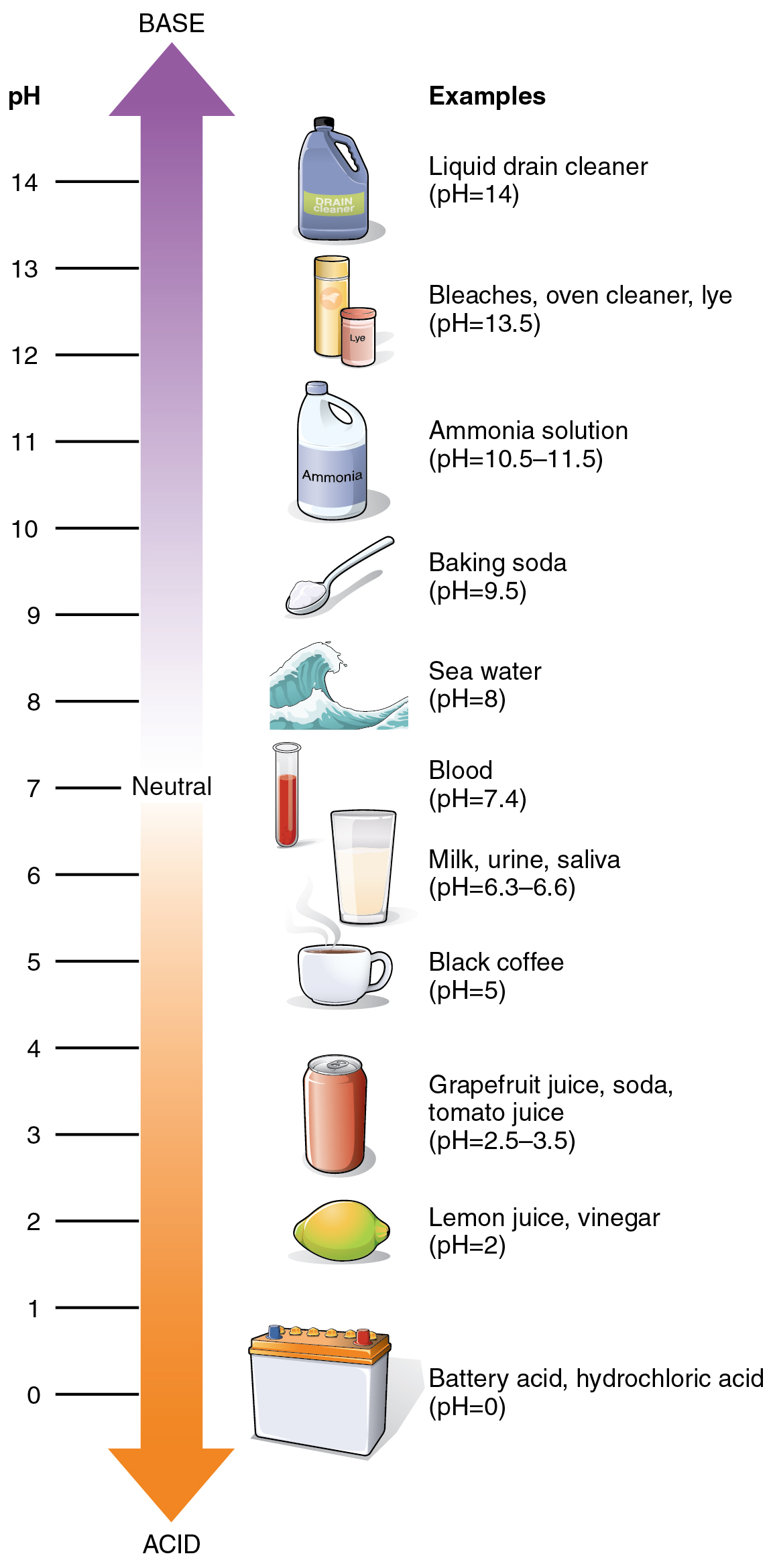
In this unit we learned about atoms which are made of protons which have a positive charge, neutrons which have no charge, a nucleus which is in the center of an atom, and electrons which are negatively charged. We also learned about how water is polar which means that it has an unequal distribution of charge between hydrogen and oxygen molecules, and how on a scale from zero to fourteen, seven is neutral, below seven is acidic, and above seven is basic.
Later on in the unit we learned about the four macro molecules which include carbohydrates which are rings of carbon, hydrogen, and oxygen, lipids which are large molecules which contain long chains of carbon and hydrogen called fatty acids, proteins which are large molecules made of amino acids, and nucleic acids which are composed of thousands of nucleotides. In the last vodcast of the unit, we learned about the structures of enzymes and factors that affect enzymes which are pH and temperature.
In this unit, learning the properties of water was the most difficult for me to learn out of all the lessons in the vodcasts that we learned in unit 2. Also from these experiences I learned how to work together with my classmates when we were doing labs, and how to successfully conduct and do a lab without having much knowledge of what you are supposed to do. I think that I am a better student than before because now I have more experience on what to do because of the things we did in class, and I learned new information that I didn't know until we learned it in class.
I don't have anything that I want to know more about. One question I have is that are there other factors that could affect enzymes besides pH and temperature.
Monday, September 19, 2016
Sweetness Lab
The carbohydrate structure shape might affect how they are used by cell/organisms, because of what the carbohydrate consists of and what they are used for. The testers in my group gave similar ratings for each sample in the lab. One reason why the results could've been different is that people taste things different than others do, and another reason could be the amount of the carbohydrate that the person put on their tongue, and if the person still had the taste of the previous carbohydrate in their mouth.
According to How Stuff Works, the tongue tastes due to taste buds, which contains gustatory receptor cells that respond to different tastes such as things that are bitter, sweet, and salty. When the gustatory cells activate, it sends a electrical impulse to a region in the cerebral cortex, and then the brain interprets it as a taste. The tasters could have ranked the sweetness of the samples differently because of how their gustatory cells react to the taste of the thing that they ate.
Wednesday, September 7, 2016
Friday, September 2, 2016
Jean Lab
In this lab we asked the question, What concentration of bleach is best to fade the color out of new denim material in ten minutes without visible damage to the fabric? We found out during the experiment that full-strength bleach damaged the fabric more and it didn't change the color that much compared to a diluted bleach concentration. Some observations that my group made were that the more bleach concentration, the more the fabric would get damaged and the color would also fade more than less bleach concentration. In the article "How Does Bleach Work?" by Wonderopolis, it states how bleach releases oxygen molecules, which break up the chemical bonds of chromophores or chemical compounds. As a result of that process, the molecules show no colors, so our eyes see it as the color white. This data supports our claim because it explains how bleach makes objects lose their color by breaking down the chemical compounds.
Our data contradicts the expected results because the fabric in full bleach concentration didn't change color that much, and it was almost the same color as the pieces in the fifty percent diluted bleach concentration. These errors affected the results, because we couldn't tell which bleach concentration was the best to fade out the color without damaging the fabric. Also, during the lab our group put our fabric in the petri dishes with the bleach concentrations when other groups put their fabric in the beakers. When we had to put the fabric into water to stop the bleaching process, our group put the fabric in for over two minutes which could've affected the experiment. Due to these errors, in future experiments I would recommend that the instructions should be clearer or more understandable and that everyone would know what they are supposed to do during the experiment. Another recommendation I would make is that we would be able to spend more time on the experiment to make sure that the results would be more accurate.
This lab was done to demonstrate the Scientific Method, which we learned in one of our previous vodcasts. From this lab I learned about how to create a good hypothesis, and being able to make good observations on experiments, which helps me understand the concept of the Scientific Method. Based on my experience from this lab, I could apply this to when I need to do other experiments in science, so it would help me to be able to do things more easily. Also this would get me into a good habit of not trying to rush things and being able to take good observations in order to get better results in things.
Our data contradicts the expected results because the fabric in full bleach concentration didn't change color that much, and it was almost the same color as the pieces in the fifty percent diluted bleach concentration. These errors affected the results, because we couldn't tell which bleach concentration was the best to fade out the color without damaging the fabric. Also, during the lab our group put our fabric in the petri dishes with the bleach concentrations when other groups put their fabric in the beakers. When we had to put the fabric into water to stop the bleaching process, our group put the fabric in for over two minutes which could've affected the experiment. Due to these errors, in future experiments I would recommend that the instructions should be clearer or more understandable and that everyone would know what they are supposed to do during the experiment. Another recommendation I would make is that we would be able to spend more time on the experiment to make sure that the results would be more accurate.
This lab was done to demonstrate the Scientific Method, which we learned in one of our previous vodcasts. From this lab I learned about how to create a good hypothesis, and being able to make good observations on experiments, which helps me understand the concept of the Scientific Method. Based on my experience from this lab, I could apply this to when I need to do other experiments in science, so it would help me to be able to do things more easily. Also this would get me into a good habit of not trying to rush things and being able to take good observations in order to get better results in things.
Subscribe to:
Comments (Atom)