Friday, June 2, 2017

Letter to a Biology Student

Dear Biology Student,
My name is Sydney Murakami. I was in ninth grade, and I was 14 at the beginning of the school year.  I went to Redwood Middle School, and I wasn't that interested in any subjects in the beginning of the school year. The classes that I took in this year were Physical Education, Art, Spanish, English 9, Biology, Geometry, and Health in the fall and World Geography in the spring. I wasn't that excited to go to high school in the beginning of the school year because of the bell schedule and it was very different compared to middle school. But as the school year went on, I started to enjoy high school because you have more freedom than middle school such as being able to use your phones during tutorial and lunch and I find that it is less chaotic than middle school where people are running around, or interrupting during class. The only interest I have outside of school is golf, which I practice for three days during the week. Some things that I expected from the class on the first day was that I would have more homework, and that I would have to study more for tests since it makes a bigger impact on your grade than in middle school where if you do your homework your grade would be fine even though you did bad on your test.
Some of Mr. Orre's expectations are that you shouldn't interrupt him while he is talking and that you shouldn't fool around when you are doing labs in this class. The first thing I do when I come to class is get my notebook and a writing utensil for our Do Now, which is usually a question that we answer in our notebook about what we learned in our homework. A typical class day would be reviewing the homework, going over the schedule for the day, and other activities later such as labs, videos, classwork, or projects. When we do a lab, Mr. Orre gives us a handout about what the lab is about, what we are supposed to do, and the main question that we have to answer. After that, he reviews the lab, and then leaves us on our own with our group mates. Our homework is usually vodcasts, which are videos about a subject that we take notes on, and while we are doing a unit we are assigned textbook notes, where we write and answer about five questions, write vocabulary, and a relate and review about what we have learned. We have homework about everyday, but it depends on if you tend to procrastinate because sometimes we can go ahead and do later vodcasts which I suggest that you do because it helps later on when you have a lot of homework and you don't have time to do it. It usually takes me around 20 minutes or less to finish my homework and sometimes it could take 30 minutes, but it depends on what was assigned and how long the vodcasts are. It is optional to do the vodcasts until we do the notebook check during class which occurs at the end of each unit. I suggest that you should do the vodcasts and turn them in on time because if you aren't a good test taker it could help your grade a little. In this class we only do tests which we do at the end of each unit, which are usually around 50 questions. The questions on the test are from the vodcasts of the unit and what was reviewed in class, and we are allowed to write information on the test sheet once we get it so that if you think that you will forget something you can write it down. The blog that we created for this class is used to show others your work that you did in class and do something besides writing it down on paper and turning it in. My favorite blog post was the pig dissection reflection, because it is the most interesting due to the video of the pig that my group dissected and it was an activity that I enjoyed in this lab, even though at first I thought that it was gross and that it was going to smell bad. Click here to see my blog post.
Some things that Mr. Orre doesn't like is when we don't clean up lab materials properly, interrupting others when they are talking, or just fool around during class. Homework is important in receiving a good grade in class, because if you don't do your homework and don't do well on tests, then your grade wouldn't be good. Also we have more homework than tests, which can be up to around 50 points sometimes which can be worth even more than some tests, so I highly advise you to do your homework and turn it in on time. If your want to get a good grade on your test, you should study by having someone test you on what you've learned or use flashcards or another technique and not just look over the notes. You also shouldn't just think that you should just study the vocabulary because that won't help you that much on the tests. Some mistakes that I made was procrastinating on textbook notes in the beginning of the year and only looking over the notes for studying, which helped me become a better student later because I learned that it wasn't a good way to study and that it isn't good to procrastinate and save things for later.
I would rate this class a 8 out of 10, because of the labs that we did and I also think that what we learned this year was interesting and how we reviewed the information during class. Next year I am taking Chemistry because I decided that it would suit me more to do that class rather than Chemistry Honors. I hope that this information will help you later on in this class, and I hope you have fun in this class.

Signed
 -Sydney Murakami

Wednesday, May 31, 2017

Pig Dissection Reflection

The purpose of this lab was to study about the anatomy of a fetal pig, which also helped us learn more about human anatomy since there are similarities between the structures of pigs and humans. This dissection related to what we have learned in this unit by how we got to learn where the different systems are located in the animal and how structures function. My favorite part of the dissection was finding the structures and cutting the pig, because I never have done it before and it's something that I may not have the opportunity to do again. I think that this dissection was a valuable experience because I got to know more about the anatomy of a pig which is similar to a human's. Also being able to learn more with an actual organism is better than looking at a worksheet because you get to see and experience it in person.

Monday, May 22, 2017

20 Time Individual Reflection

I chose this challenge, because it seemed interesting when I learned about it in class, and I wanted to know more about genetically modified foods. For example, the pros and cons of genetically modified foods and how they are made. My goal was to see whether my prediction was correct about how people would prefer the genetically modified foods over the organic foods. My plan was to first research about the topics that I would need to conduct the experiment and learn more about the subject. After I finished researching I planned to start preparing for the experiment by getting the foods and then bringing it to school to have people rate the organic and genetically modified foods. Then after I finished my experiment I would analyze my results to see if my prediction was correct and then use my research to add more information about why my results ended up that way.

My partner and I were able to complete our project on time, but we had a few problems during the process. We were able to get results that showed that our prediction was correct, but we didn't have any information about why people preferred one food over another and what are the differences between genetically modified and organic foods. During this project, I learned that I should not procrastinate on things and that I should plan ahead when I want to complete things. If I had another chance to do this project I would spend more time on the experiment, because we were not able to have many people rate the foods and we didn't have many foods that people could try. I learned that I tend to do things later when I was supposed to do it earlier, and I tend to procrastinate because I think that I have enough time to do everything later on. 

I would not continue this challenge, because I think that I proved a point about why people prefer genetically modified foods, the advantages and disadvantages of it, and I also finished it already with m partner. If I did continue it I would add more to the experiment like using more types of food and having more people try the foods.

Wednesday, May 10, 2017

Unit 9 Reflection

This unit was on classification, which is to group organisms based on similarities, and taxonomy, the study of naming and classifying organisms. After we learned the five kingdoms, Monera, Protista, Plantae, Fungi, and Animalia, and the three domains which are Bacteria, Archaea, and Eukarya. Then we learned about viruses, which are very small infectious particles and the three most common shapes of bacteria which are spheres, rods, and spirals. Next we learned about fungi whose cell walls are made of chitin, and absorb their food through hyphae which are long strands of fungi. After we learned the major plant phyla, which are Bryophyta(Mosses), Pterophyta(Ferns), Gymnosperms(Cone bearing plants), and Angiosperms(Flowering Plants).

Towards the end we learned about the major invertebrate phyla which include Phylum Porifera which have no symmetry and are sessile, Phylum Cnidaria which have two body forms, polyps or medusas, Phylum Arthropoda which have and exoskeleton made of chitin and a jointed appendage, and others. Finally we learned about the major vertebrate phyla which include Phylum Chordata, which have an endoskeleton made of bone or cartilage, Class Agnatha which are jawless fish with two groups, hagfish and lampreys, and others. Some things that I would want to learn about is how they came up with the names for classifying organisms.

Some parts of our unit is similar to our Geologic Timeline Project, because they both included how things changed and organisms evolved over time. I think that my presentation was okay, and I could have done better in some parts during the presentation. Some things that went well was how I was able to share all my information and include information that people probably wouldn't know. What could have been better was making eye contact during some parts of the presentation, slowing down while talking, and not reading off the screen the whole time. One lesson that I will take from this experience is that I should practice more before the presentation date, and I could apply this to other presentations by using it as an example of things like what I should do later on in presentations like slowing down when speaking and trying to make eye contact.

Link to presentation-https://docs.google.com/presentation/d/1wYvefkdyrS9zcmQhfDAA0s3xdJQe2Nk4F15gUqQFpAE/edit#slide=id.p

Thursday, April 20, 2017

Geologic Timeline Reflection

One major event in Earth's history was the Cretaceous-Paleogene extinction. What made it significant was how it was the end of the dinosaurs and their was a loss of 76% of species. Another reason why it was a major event, was that because the dinosaurs became extinct it introduced other species later such as mammals, insects, and birds. Another major event was the appearance of human ancestors, which is significant because if they didn't exist we may not be here today our we could've evolved from something else. Finally, another major event was Permian-Triassic Extinction, which is significant because 96% of species became extinct and during that time there was a lack of oxygen in the ocean. 1280px-Postosuchus.jpg (1280×857)

The scale of the Earth is separated into different periods which all add to around 4.6 billion years and humans have only showed up 5.3 million years ago which is a huge difference compared to the origin of the Earth. What surprised me was that in the video we watched we are only a second out of 12 months. 

We have made a huge impact on our planet in a short time. For example we now are creating building and other things that have now replaced environments that have been there for a long time. Also we have invented many things in a short amount of time compared to the time before humans existed. 

Sunday, April 9, 2017

Unit 8 Reflection


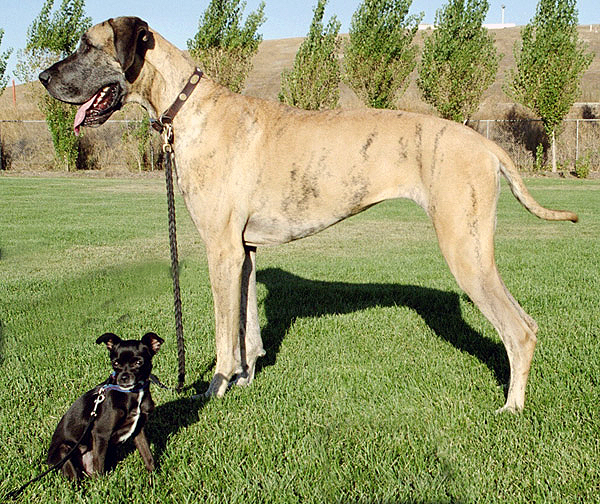
Big_and_little_dog_1.jpg (600×504)
838px-Portrait_of_Charles_Darwin._Wellcome_M0010103.jpg (838×1024)In the beginning of this unit we learned about artificial selection, which is when humans select traits from a population's variation and they only mate individuals who have that trait. The result is that the species changes over time and a new breed is created. Some examples of artificial selection are dogs like collies which are used for sheep herding, and cattle which contains a lot of meat or milk. After we learned about Charles Darwin, who discovered that natural selection causes evolution, and that natural selection is a process that weeds out traits that don't help an individual survive. In the Hunger Games Lab, we conducted an experiment to see how natural selection causes a population to evolve, which relates to what we learned in this unit.

Next we learned about the gene pool which is the total of all alleles in a population, and allele frequency which is how common an allele is in a population. Then we learned about speciation, the rise of two or more species from one existing species and the causes which are behavioral isolation, geographic isolation, and temporal isolation. Later we learned about genetic drift which is when a random event drastically changes a population and gene flow which is when alleles move from one population to another. Finally we learned about the four Eras which include the Precambrian, Paleozoic, Mesozoic, and Cenozoic Era.

One thing that I would want to learn more about would be how far can humans go to change species that they want using artificial selection. One thing that I was wondering about was how did humans change species for their own purposes and how long did it take to achieve what they wanted. What I have done to be more assertive is trying to make eye contact when saying something to someone in class, and the things that I could work on is my posture because when I talk to someone my posture becomes different because for me it is uncomfortable to look in the eyes of someone else and talk about something.

Thursday, March 30, 2017

Hunger Games Lab

1. In this lab we experimented on how natural selection causes species to change and evolve over time. In this lab we stimulated a population of organisms trying to survive, which included Stumpys who could only pick up food with their wrists, Knucklers who could pick up food with their index and middle fingers, and Pinchers who picked up their food using their thumb and index finger. Using those three phenotypes for the organisms, we tried to figure out how natural selection works and if the population would evolve during our trials.

2. The phenotype that was the best at picking up food was Knucklers because you could easily pick up multiple food quickly.

3. In our population it did evolve, because in our data the population gradually became Knucklers and Stumpys decreased and at the end there was only one Stumpy in the population when there was originally ten. As shown in our graph there was an increase in the "A" allele frequency and a slight increase in the "a" allele frequency.

4. Most of the events in the lab were not-random like how where the food was placed and who each person wanted to mate with. The effects of the events caused the population to evolve because organisms like Stumpys would be able to get more food when there would be a pile of food in one area, compared to when food was equally distributed.

5. The results would have been different if the food size became smaller or larger because if the foods were bigger the Stumpys would've had an easier time to pick up food, and if the food was smaller the Pinchers and Knucklers would have an easier time. Some things that may occur in nature in how food may be too small for bigger animals to access and eat compared to smaller animals being more adapted to eating food that are smaller.

6. The results would have been different if there was incomplete dominance because then when two organisms with different phenotypes mate it would be a combination of both of the parents, compared to the lab where the offspring is either one of the parents or inherits a different phenotype that is a different combination than their parents.

7. The relationship between natural selection and evolution is that natural selection causes evolution when a species weeds out traits that wouldn't help them survive in their environment or when a species adapts to a different environment which would change how they would eat and others.

8. The strategies that individuals used and adopted in order to increase their chances of survival and reproduction were going to places with food where not a lot of people were and being more aggressive and faster when grabbing food. This would have affected the allele frequency in the population because if one species ended up surviving and reproducing more than the other species than the allele frequency for that species would raise and the others would decrease. In nature since there are limits to most things, individuals would have to compete to be able to mate with another individual and produce offspring and they would have to be able to easily access other resources in order to survive.

9. In evolution the thing that evolves are the species who are changing due to increase there chances to survive and produce offspring. I think that natural selection acts on both genotype and phenotype. For example if a bird with a big beak left one area and went to another where the food there was smaller and the bird couldn't easily pick up food, the bird would gradually have a smaller beak in order to survive better in it's environment. That would change both the bird's phenotype and genotype because the beak size changed and if the bird were to mate with another bird it would pass the big beak genotype to its offspring and not the smaller beak.

10. I don't have any questions about this subject.

Tuesday, March 7, 2017

Unit 7 Reflection


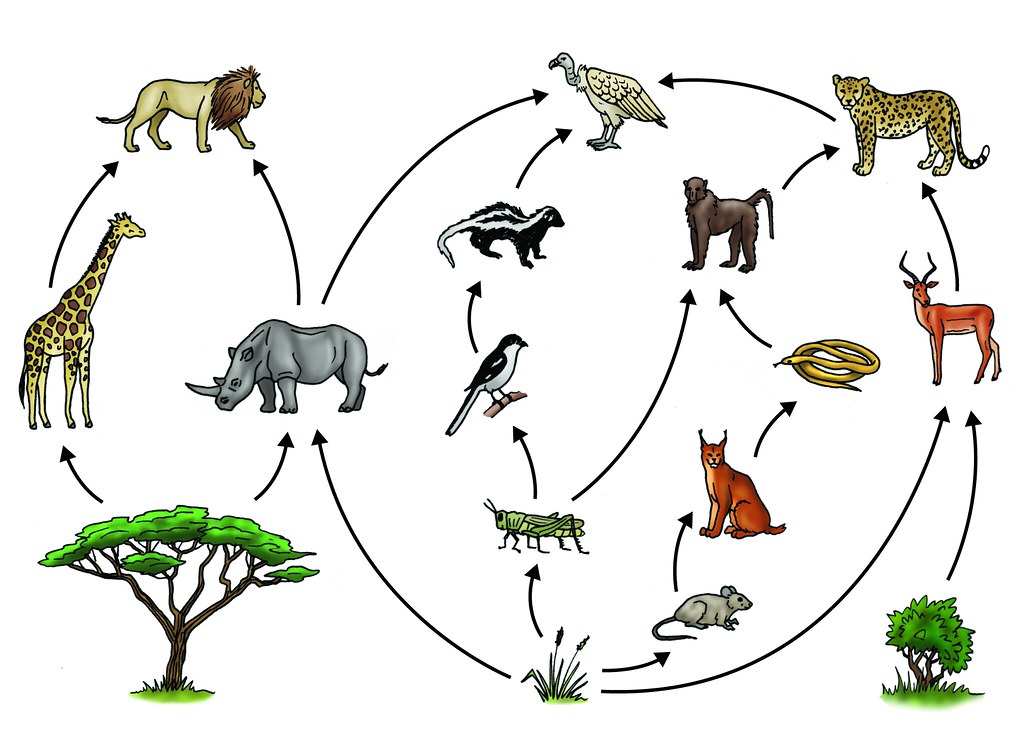
This unit was about ecology, which is the study of interactions between organisms and their environment. One topic that we learned about in the beginning of our unit was abiotic and biotic factors which are nonliving and living things, and the levels of organization which is organism, population, community, ecosystem, and biome/biosphere. Later we learned about food chains which show how organisms get their energy, and food webs which show how most organisms eat more than one thing and they are more accurate. Towards the end of the unit we learned about the factors that affects populations such as immigration and emigration, and that carrying capacity is the maximum population size that an environment can support. Next we learned about the nutrient cycles which include the water, carbon, nitrogen, and phosphorous cycles which provide organisms things that are essential to life. Finally we learned about biodiversity, the total number of species in an ecosystems, which includes genetic, species, and ecosystem diversity. In our previous unit about bioethics, I made a blog post about Cloning Mammoths which has some things that are similar to this unit, like how because of the things that we want we are endangering other species. 

One thing that I would want to learn more about would be about how people figure out the carrying capacity for certain species. I think that when we had to do the Conservation Biology Project in class, my collaboration skills improved than when we had to do group work last semester. Some things that went well with my group was that we agreed on most things that we wanted on the presentation and we made sure that we finished everything on time so that we didn't have to do it for homework. One thing that didn't go well was editing the video, so we had to redo it because it had to just be one video instead of multiple ones. I learned more about what we had learned during this unit by researching about the area that we chose by adding things that we learned to it. I think that the collaboration was good in our group, because we managed our time well each period that we got to work in and we were able to agree and help out with others in our group. 

Tuesday, January 31, 2017

Unit 6 Reflection

The beginning of this unit was about biotechnology, which is the study and manipulation of living things to benefit mankind, and it generally focuses on DNA, proteins, and inheritance. We also learned about the four applications of biotechnology which are industrial and environmental, medical/pharmaceutical, diagnostic research, and agricultural. Examples of the applications are fermentation(industrial and environmental), gene therapy(medical/pharmaceutical), transgenic organisms and classical breeding(agricultural), and genetic testing(diagnostic). Next, we learned about the technologies of biotechnology which are the Polymerase Chain Reaction(PCR), which is a procedure to amplify a specific DNA region, and Gel Electrophoresis which uses electricity to separate DNA fragments based on their sizes. After we learned about recombinant DNA technology which is inserting the DNA of one organism into the DNA of another organism. Finally we learned about bioethics, which is the study of decision-making as it applies to moral decisions that are made because of the advances in biology, technology, and medicine. 

When we first learned about recombinant DNA I didn't understand the functions and what the recombinant DNA was until we went over it in class. I think that overall I understand more than when I first learned about the topics because we got to discuss about them during class. During this unit we did two labs which were the pGLO Lab and the Candy Electrophoresis Lab. From these experiences I learned about how people would tend to use articificial coloring and other things in order to make their product seem better, even though it may not be good for you compared to something that is made from natural products. I also learned about other applications for genetic engineering and what pGLO is used for currently. One thing that I would want to learn more about would be about why certain products are genetically modified. Currently I have improved in one of my goals, which was improving on my studying habits. The next things that I want to do is continue to improve on participating in my classes and spend more time studying than I am now.

Monday, January 30, 2017

pGLO Lab Analysis


Plate
Number of Colonies
Color of colonies under room light
Color of colonies under   UV light
- pGLO LB
0nonenone
- pGLO LB/amp
0nonenone
+ pGLO LB/amp
39whitenone
+ pGLO LB/amp/ara
31whitebright green, glowing


The two new traits that our transformed bacteria had was that under UV light that colonies glowed and it was resistant to ampicillin. I think that in the 100 uL of bacteria that we spread on the plate there was about 30 million bacteria, because you usually have to look through microscopes in order to see one bacteria. So probably many bacteria could fit in that single colony. The role of arabinose in the plates was that the bacteria would only glow if it was present.

In the website addgene.org, three current uses for GFP(green fluorescent protein) are fusion tagging, protein purification, and biosensors. Other applications for genetic engineering are producing insulin and human growth hormones.


Wednesday, January 25, 2017

Bioethics Reading Extra Credit

Мамонтёнок_Юка.JPG (2560×1470)The article that I chose is Mammoths are a huge part of my life. But cloning them is wrong. The topic was about whether we should attempt to clone mammoths because we think that is would be interesting to see an animal that is similar to a mammoth or whether we shouldn't because we could risk endangering the Asian elephant species even more by trying to clone a mammoth. In the article, Scientists Want to Bring Back Woolly Mammoths — But Why?, it stated how it would be fascinating to be able to see a mammoth because it was a animal that became extinct a long time ago. But to clone a mammoth it would require having to experiment or use Asian elephants as surrogates for an animal that has a similar ancestor but it may turn out to be unsuccessful which could endanger the species even more than it is now. In another article, Woolly Mammoth Clones Closer Than Ever, Thanks to Genome Sequencing, it mentioned at the end how if we could splice the DNA of mammoths into the cells of Asian elephants, it could help creatures to live in colder areas and to reduce human conflict. 

The benefits of this would be that we would be able to change animals DNA so that they would be able to live in colder areas away from humans. The potential risks of this is that it could endanger the Asian elephants even more and it may be something that may never work because they have to find a way to get eggs from the elephants and put it in a surrogate in order to clone a mammoth. 

I believe that we shouldn't attempt to clone a mammoth because there are more risks in order to clone one. One thing is that it could endanger a species even more, and if the attempt to clone one is unsuccessful it would be a waste of experimenting and using a species that may later become extinct. Second, I believe that even though mammoths are a creature that we are fascinated by because they existed a long time ago, we shouldn't try to clone one because it would be interesting to see an animal close to what a mammoth looks like. 

Works cited-

"Woolly Mammoth Clones Closer Than Ever, Thanks to Genome Sequencing." Live Science, 2 July 2015, www.livescience.com/51424-woolly-mammoth-genome-sequenced.html.

"Scientists Want to Bring Back Woolly Mammoths — But Why?" NBC NEWS, 22 May 2016, www.nbcnews.com/
news/world/scientists-want-bring-back-woolly-mammoths-why-n575581.

Thursday, January 19, 2017

Candy Electrophoresis Lab


When we analyzed the results of the lab, one of our experimental samples contained a different dye that didn't match the reference dyes. I think that the Fast Green FCF would migrate similarly to the dyes that we examined in this lab, because I think it is negatively charged which was like the samples that we used which were the dyes from candies. I think that dog food manufacturers put artificial food coloring in dog foods because it may be quicker and easier and more pleasant to look at than having something that takes long to make or something that doesn't look appealing. I think that artificial colors are more preferable than natural food colors because maybe the colors make it more appealing than natural food colors and it is easier to use and get. 


The two factors that controlled the distance the colored dye solutions migrated were the charges from the gel electrophoresis chamber and how the dyes from the candies charges. The force that helped move the dyes through the gel was electricity. The component of the electrophoresis system that caused the molecules to separate by size was the agarose in the gel, because the dyes were placed in the wells in the gel so it made the molecules of the dyes separate after the electrophoresis chamber was turned on. I expect that DNA molecules with molecular weights of 600, 1000, 2000, and 5000 daltons would separate the same as the dyes that we used but it probably won't move as quickly or travel as far as the dyes that we experimented with during this lab.


Tuesday, January 10, 2017

New Year Goals

One of my goals for this semester is to improve on my studying habits by having someone test me on certain topics and make flashcards or using Quizlet to help me understand a certain word or phrase better. I could also look through the information that we learned and see which topic I had a harder time on and focus more on it. I could also have one of my family members help quiz me on topics and I could make myself a practice quiz that would be similar to the format of the tests that we have to do.

Another goal for this semester is to participate more in some of my classes. For one of my classes I could try to participate at least once every week and after I get comfortable I would start to participate at least two times every week or occasionally for one week I would only participate once and the next week I would participate twice. For another class I want to try to talk during class discussions at least four times this semester, because in the previous semester I didn't talk at all during class discussions except for when we had to go into smaller groups for activities.